
Cartilage Injuries in the Setting of an ACL Injury
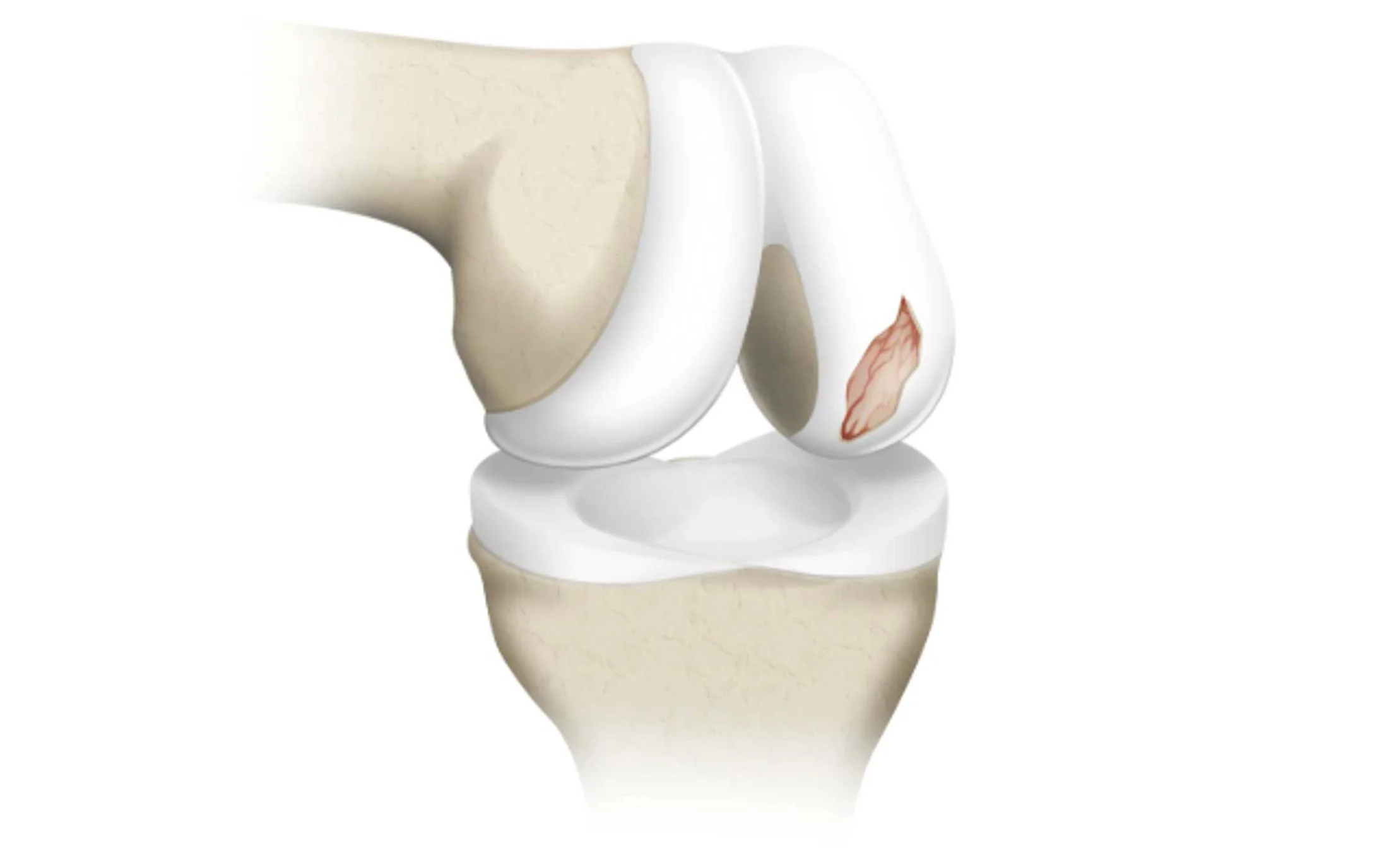
What Is Articular Cartilage?
Cartilage is the smooth, resilient tissue that sheathes the ends of the bones within any joint. Because cartilage possesses no blood supply of its own, it lacks the capacity to heal readily once injured. This single fact accounts for the particular attention it receives during your ACL evaluation and surgery.
How Common Is Articular Cartilage Injury in the Setting of an ACL Tear?
Approximately one in four people undergoing ACL reconstruction is found to have a notable, full-thickness cartilage lesion at the time of surgery, according to national surgical registries encompassing thousands of patients [1]. Such injury is most frequently observed on the lateral femoral condyle, the site most vulnerable during the ACL tear itself. As the knee gives way, the lateral femur rotates posteriorly and impacts the back of the lateral tibia, producing a characteristic “kissing” contusion pattern that damages the overlying cartilage on both surfaces [2].

Will This Change My ACL Surgery?
Most commonly, the cartilage lesion is simply left undisturbed. Acute surgical intervention of these lesions has not been shown to improve outcomes and can, in some analyses, be associated with additional complications and increased pain[3,4,5]. The most frequent form of intervention is debridement of the lesion, performed only if loose bodies or unstable flaps of cartilage are present. Historically, microfracture or drilling of the lesion was performed to encourage the formation of scar tissue within the defect; however, this technique has been associated with increased pain, slower rehabilitation, and reduced rates of return to sport in some analyses[5]. As a result, microfracture now occupies a limited role in the contemporary management of cartilage injuries encountered during ACL surgery.
A large cohort of patients in Norway and Sweden, tracked through national surgical registries, has been followed at 2, 5, and now 10 years after ACL reconstruction. Investigators specifically compared patients whose cartilage lesion was smoothed (debridement) or microfractured against those whose lesion was simply left alone at the time of ACL surgery[3,4,5]. At every one of these follow-up intervals — 2, 5, and 10 years — no meaningful difference emerged in how patients felt or how their knees functioned, whether the lesion was actively treated or left untouched[3,4,5].
What Does This Mean for My Knee, Long Term?
Having a cartilage lesion at the time of your ACL surgery is associated with a somewhat higher likelihood of a less-than-perfect outcome years down the road, regardless of which treatment path is chosen.
Large studies following patients for 5 to 10 years after ACL reconstruction have found that those with a more substantial cartilage lesion at the time of surgery tend to report slightly lower knee function and comfort scores later on, compared with patients whose cartilage was intact at the time of ACL surgery [9, 10]. This association is not contingent on whether the lesion was treated — it is observed regardless of which cartilage procedure, if any, was performed.
When is a More Invasive Procedure Required for a Cartilage Lesion in the Setting of an ACL Injury?
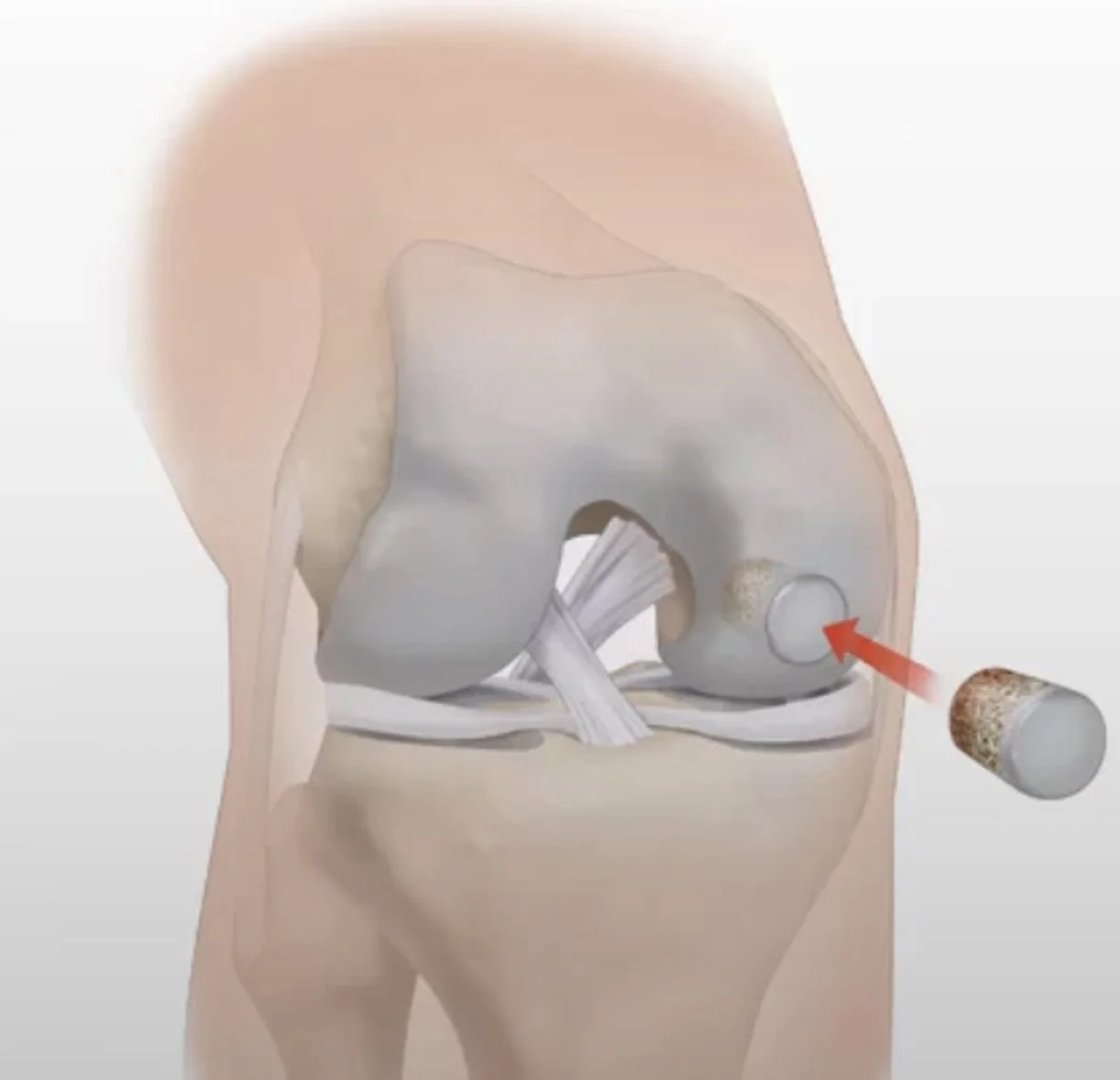
Most cartilage lesions identified during ACL reconstruction do not require further intervention. A separate cartilage procedure is typically reserved for larger, symptomatic lesions and is generally considered only after recovery from the stabilisation procedure itself. This includes resurfacing procedures such as osteochondral transplants and osteotomies/realignment procedures.
Will this Slow Down my ACL Reconstruction Recovery Timeline?
If your lesion was simply left alone or smoothed, your rehabilitation timeline is generally dictated by the ACL reconstruction itself. With microfracture or a cartilage graft, your weight-bearing status and rehabilitation protocol will be adjusted to protect the articular surface while it heals.
Does this increase the Likelihood of Developing Knee Arthritis?
A cartilage lesion is one of several factors researchers associate with a knee's long-term health. By the nature of the injury itself, radiographic evidence of arthritis is more likely to occur after an ACL tear than in the general population[8]. In fact, some studies report as much as a seven-fold increase in the likelihood of eventually requiring a total knee replacement following an ACL injury[6]. Thus far, there is not strong evidence that ACL reconstruction itself prevents the later development of osteoarthritis[7]; it is likely that the condition of your meniscus after surgery exerts a substantial influence on your risk of arthritis on top of your cartilage status[8]. That said, many people with a documented cartilage lesion at the time of ACL surgery go on to enjoy good, active knees for years afterward. Maintaining a healthy weight, adhering to your rehabilitation program, and keeping the knee strong all meaningfully contribute to the best possible outcome.
How Do Cartilage Lesions Affect Return to Sport Rates?
Larger cartilage lesions may compromise your ability to return to high-level, high-impact sport and are more likely to necessitate further intervention, such as a resurfacing procedure, to improve pain and function within the knee[11]. On the whole, the presence of a larger cartilage lesion diminishes the likelihood that an athlete will return to sport following ACL injury treated with reconstruction[11].
References
1. National Knee Ligament Registries of Norway and Sweden. Nationwide prospective registry data on cartilage findings at the time of ACL reconstruction. Multi-center orthopaedic registry
2. Qiu Y, et al. Mechanisms of Non-Contact Anterior Cruciate Ligament Injury as Determined by Bone Contusion Location and Severity. Quantitative Imaging in Medicine and Surgery, 2021
3. Røtterud JH, Sivertsen EA, Forssblad M, Engebretsen L, Aroen A. Effect on Patient-Reported Outcomes of Debridement or Microfracture of Concomitant Full-Thickness Cartilage Lesions in ACL-Reconstructed Knees: A Nationwide Cohort Study of 357 Patients With 2-Year Follow-up. American Journal of Sports Medicine, 2016
4. Ulstein S, Aroen A, Engebretsen L, Forssblad M, Lygre SHL, Røtterud JH. A Controlled Comparison of Microfracture, Debridement, and No Treatment of Concomitant Full-Thickness Cartilage Lesions in ACL-Reconstructed Knees: A Nationwide Prospective Cohort Study of 368 Patients With 5-Year Follow-up. Orthopaedic Journal of Sports Medicine, 2018
5. Kjennvold S, Røtterud JH, Forssblad M, Engebretsen L, Aroen A, Ulstein S. Debridement or Microfracture for Full-Thickness Cartilage Lesions in Anterior Cruciate Ligament Reconstruction: A 10-Year Cohort Study of 326 Patients. American Journal of Sports Medicine, 2025
6. Leroux T, Ogilvie-Harris D, Dwyer T, Chahal J, Gandhi R, Mahomed N, Wasserstein D. The Risk of Knee Arthroplasty Following Cruciate Ligament Reconstruction: A Population-Based Matched Cohort Study. Journal of Bone and Joint Surgery (American), 2014
7. Frobell RB, Roos EM, Roos HP, Ranstam J, Lohmander LS. A Randomized Trial of Treatment for Acute Anterior Cruciate Ligament Tears. New England Journal of Medicine, 2010
8. von Porat A, Roos EM, Roos H. High Prevalence of Osteoarthritis 14 Years After an Anterior Cruciate Ligament Tear in Male Soccer Players: A Study of Radiographic and Patient-Relevant Outcomes. Annals of the Rheumatic Diseases, 2004
9. Spindler KP, et al. (The MOON Knee Group). Ten-Year Outcomes and Risk Factors After Anterior Cruciate Ligament Reconstruction: A MOON Longitudinal Prospective Cohort Study. American Journal of Sports Medicine, 2018
10. Ulstein S, Røtterud JH, Aroen A, et al. Effect of Concomitant Cartilage Lesions on Patient-Reported Outcomes After Anterior Cruciate Ligament Reconstruction: A Nationwide Cohort Study of 8,470 Patients With 5-Year Follow-up. Orthopaedic Journal of Sports Medicine, 2018
11. Randsborg PH, Cepeda N, Adamec D, Rodeo SA, Ranawat A, Pearle AD. Patient-Reported Outcome, Return to Sport, and Revision Rates 7–9 Years After Anterior Cruciate Ligament Reconstruction: Results From a Cohort of 2,042 Patients. American Journal of Sports Medicine, 2022
