

Proximal Hamstring Tendon Tear
Explanation of Diagnosis
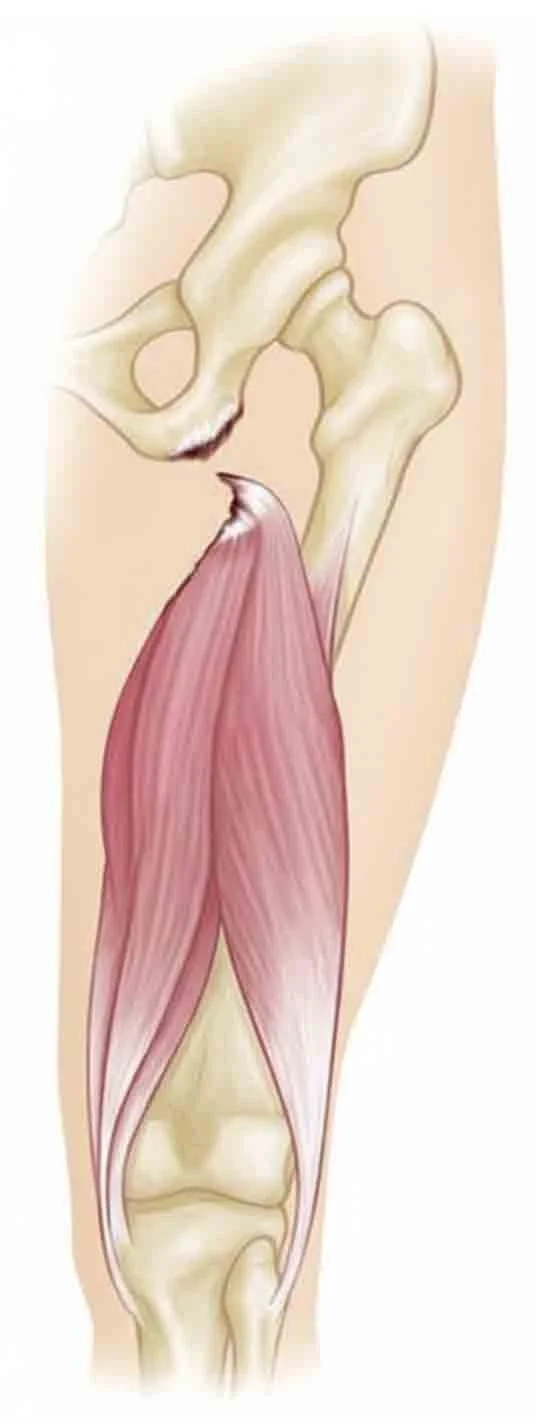
The hamstring tendons connect the pelvis to the tibia and cross both the hip and knee joints. The proximal tendons, which attach to the pelvis, can tear—most commonly due to an acute injury. This typically occurs when the hip is suddenly forced into flexion while the knee is fully extended.
When a tear occurs, patients usually experience immediate pain and swelling in the back of the hip or upper thigh. There may also be electric, radiating pain down the leg caused by irritation of the sciatic nerve. Sitting can often be very uncomfortable due to this pain.
How Is a Proximal Hamstring Tear Diagnosed?
Diagnosis begins with a detailed history and physical examination. Common symptoms include pain and swelling in the buttock region, shooting pain down the back of the leg, and weakness when bending the knee. Patients often have difficulty walking.
If a tear is suspected, X-rays are performed to evaluate the hip and pelvis and to rule out other causes of pain. An MRI scan is then obtained to confirm the diagnosis, determine the size and extent of the tear, and assess the quality of the surrounding muscle tissue.
Nonsurgical Treatment
Some hamstring tendon tears can be treated conservatively with:
Activity modification to avoid aggravating movements.
Walking aids to reduce strain on the affected leg.
Physiotherapy to strengthen the surrounding hip and core muscles and improve function.
Anti-inflammatory medications or injections to reduce pain and inflammation.
It is important to note that not all proximal hamstring tears require surgery. Partial tears or less severe injuries can often heal with time and rehabilitation.
Surgical Treatment
Surgery is recommended for patients with complete (full-thickness) proximal hamstring tears who have significant weakness, difficulty performing daily activities, or high activity demands.
It is important to note that injuries involving only the muscle belly or the tendon–muscle junction cannot be surgically repaired.
When surgery is indicated, the procedure involves reattaching the torn tendon to the pelvis using anchors. This can be performed arthroscopically (minimally invasive) or through an open approach. In certain cases, grafts may be used to reinforce the repair and restore tendon strength.