

Clavicle Fracture Fixation
How is Clavicle Fracture Fixation Performed
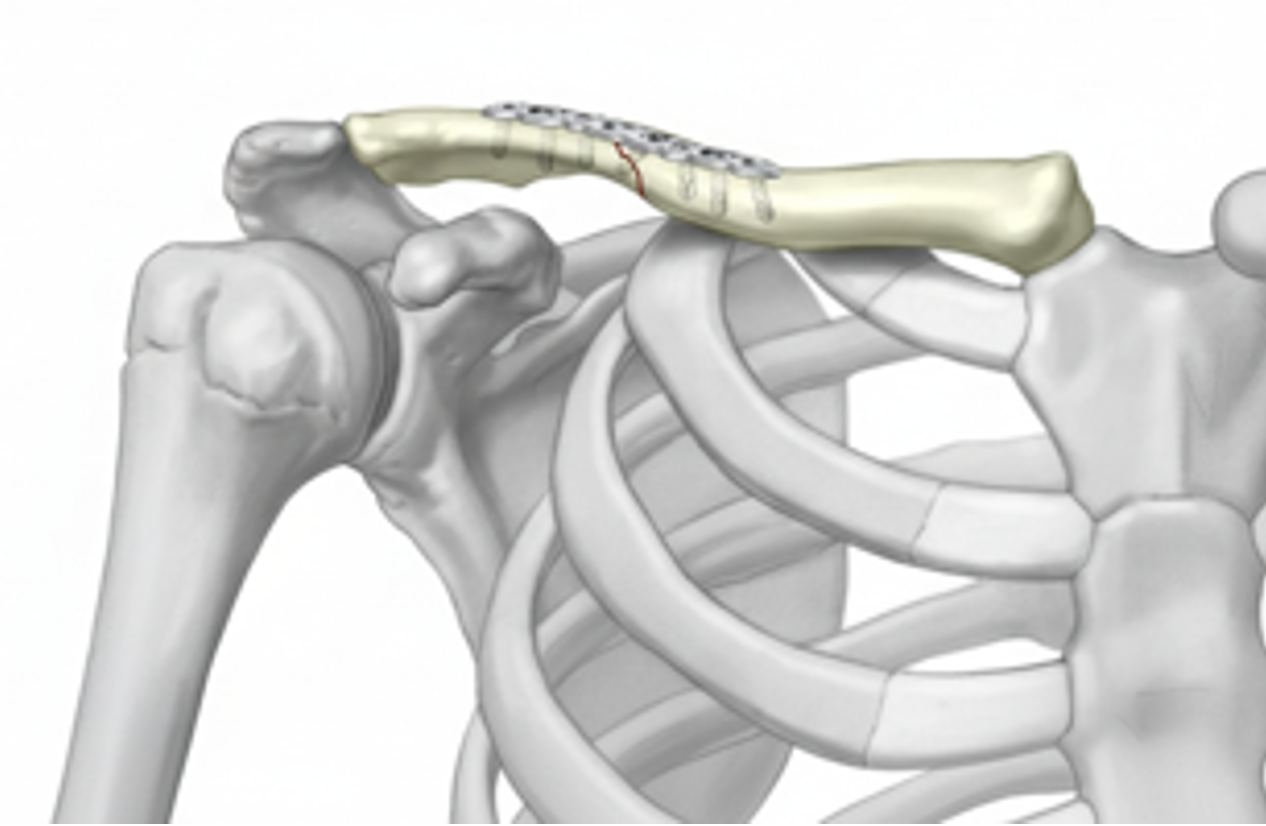
Clavicle fracture fixation is a surgical procedure performed to realign and stabilize a broken collarbone (clavicle). The operation is indicated for fractures that are significantly displaced, shortened, or associated with skin tenting or neurovascular compromise. It is also preferred over non-operative management in patients who perform heavy-duty work or are overhead athletes. The procedure is performed under general anaesthesia. An incision is made over the fracture site, the bone fragments are repositioned into their normal alignment, and fixation is achieved using a metal plate and screws. In some cases, an intramedullary device (a rod) may be used instead. The goal of surgery is to restore shoulder alignment and strength, promote bone healing, and reduce the risk of long-term deformity or dysfunction.
What is the Recovery in the Immediate Postoperative Period?
Hospital stay: Most patients go home the same day or stay overnight for observation.
Sling: You will wear a sling to support and protect the arm for approximately 2–4 weeks.
Range of motion: Gentle shoulder and elbow movement begins early.
Strengthening: Gentle strengthening starts at 2–4 weeks. Overhead strengthening can begin at 6–8 weeks.
Ice: Used frequently to control pain and swelling. You should ice for 20 minutes, 3–4 times per day, immediately after surgery. An ice/compression machine can be hired from a third party.
Sleep: You may find it more comfortable to sleep in a reclined or semi-upright position with the sling on for the first few weeks.
How is the Wound Managed?
A waterproof underlay dressing should be left on for 2 weeks.
Incisions typically heal within 2 weeks.
Showers are permitted while wounds are covered with waterproof dressings during the first 2 weeks.
Do not submerge incisions in water (baths, pools, or ocean) for 6 weeks.
A wound check with your GP, allied health provider, or our clinic is recommended at 2 weeks.
Absorbable sutures are usually used and do not require removal, though small remnants may surface naturally during healing.
How Do I Manage My Pain After a Clavicle Fracture Fixation Procedure?
Your anaesthetist may use a regional nerve block to help control pain immediately after surgery.
Local anaesthetic will also be injected around the surgical site during the procedure.
Use ice regularly (20 minutes, 3–4 times per day). An ice machine may be hired from a third party.
Take prescribed pain medication as directed. Opioids may be used short-term but have known side effects (nausea, constipation, dependence). Non-opioid medications such as paracetamol or anti-inflammatories are preferred when tolerated.
Keep the arm supported in the sling for comfort and to reduce strain on your shoulder.
What Issues Should I Call the Clinic Regarding?
You should contact your surgeon or clinic immediately if you notice:
Increasing redness, swelling, or foul-smelling drainage from the wound.
Persistent or worsening pain not controlled by medication.
Fever, chills, or night sweats.
Numbness, tingling, or weakness in the arm or hand.
Any sudden injury or fall resulting in new deformity or pain.
Prompt review allows early management of potential complications.
When Can I Return to Normal Activities After Clavicle Fracture Fixation?
Recovery varies depending on the type of fracture and your progress in rehabilitation. As a general guide:
Light daily activities: Immediately, using your non-operated arm.
Desk or computer work: 1–2 weeks, if comfortable.
Shoulder movement: Gentle motion begins after 1–2 weeks.
Strengthening: Gentle strengthening starts around 2–4 weeks. Heavy lifting and overhead strengthening begin at 6 weeks.
Contact or overhead sports: Typically after 4–6 months, depending on bone healing and surgeon clearance.
When Can I Drive?
You can usually drive once you can safely control the steering wheel and perform emergency manoeuvres comfortably. This is typically around 4–6 weeks after surgery. You must not drive while taking strong pain medication (e.g., opioids).
When Can I Return to Work?
Return to work depends on your occupation:
Office or sedentary work: 1–2 weeks, once you can commute safely.
Light manual work: 4–6 weeks.
Heavy manual labour or overhead work: 3–4 months, depending on recovery and fracture healing.
Should I See a Physiotherapist?
Physiotherapy is recommended for optimal recovery after clavicle fracture fixation. Your physiotherapist will:
Guide you through a structured rehabilitation program focusing on restoring shoulder range of motion, scapular stability, and gradual strengthening.
Help reduce stiffness and improve posture and shoulder mechanics.
Progress exercises safely from early motion to full functional recovery.
Most patients continue physiotherapy for 3–6 months to achieve full function.
What Are the Complications After a Clavicle Fracture Fixation Procedure?
Potential complications include:
Infection or wound healing issues.
Hardware irritation or prominence under the skin (plate or screws). Hardware may be removed after 12 months if it becomes painful.
Numbness or tingling over the incision due to superficial nerve injuries that may occur during exposure of the fracture.
Neurovascular injury – the clavicle sits next to the brachial plexus and subclavian artery and vein, which are very rarely injured by drills or screws.
Pneumothorax (punctured lung) – a very rare injury from drills, screws, or an intramedullary implant.
Non-union (failure of the bone to heal) or malunion (healing in a suboptimal position).
Shoulder stiffness or reduced range of motion.
Re-fracture after plate removal or new trauma. The plate should be left in place if you wish to return to contact sports to prevent re-fracture.
Pain or discomfort from hardware requiring later removal.
Inability to return to the same level of work or sport.
Complications related to the anaesthetic block (nerve toxicity, persistent numbness, shortness of breath, or rarely pneumothorax).
Cerebral vascular accident from positioning and anaesthetic.