
ACL Injury Prevention: What Actually Works
Anterior cruciate ligament (ACL) tears are among the most common and most feared injuries in sport — they sideline athletes for 9-12 months, carry a real risk of re-injury, and raise the long-term risk of knee osteoarthritis. The good news is that a large and growing body of research shows ACL injury risk isn't just bad luck. Structured prevention programs can meaningfully reduce tear rates, especially in high-risk sports like soccer, basketball, and handball.
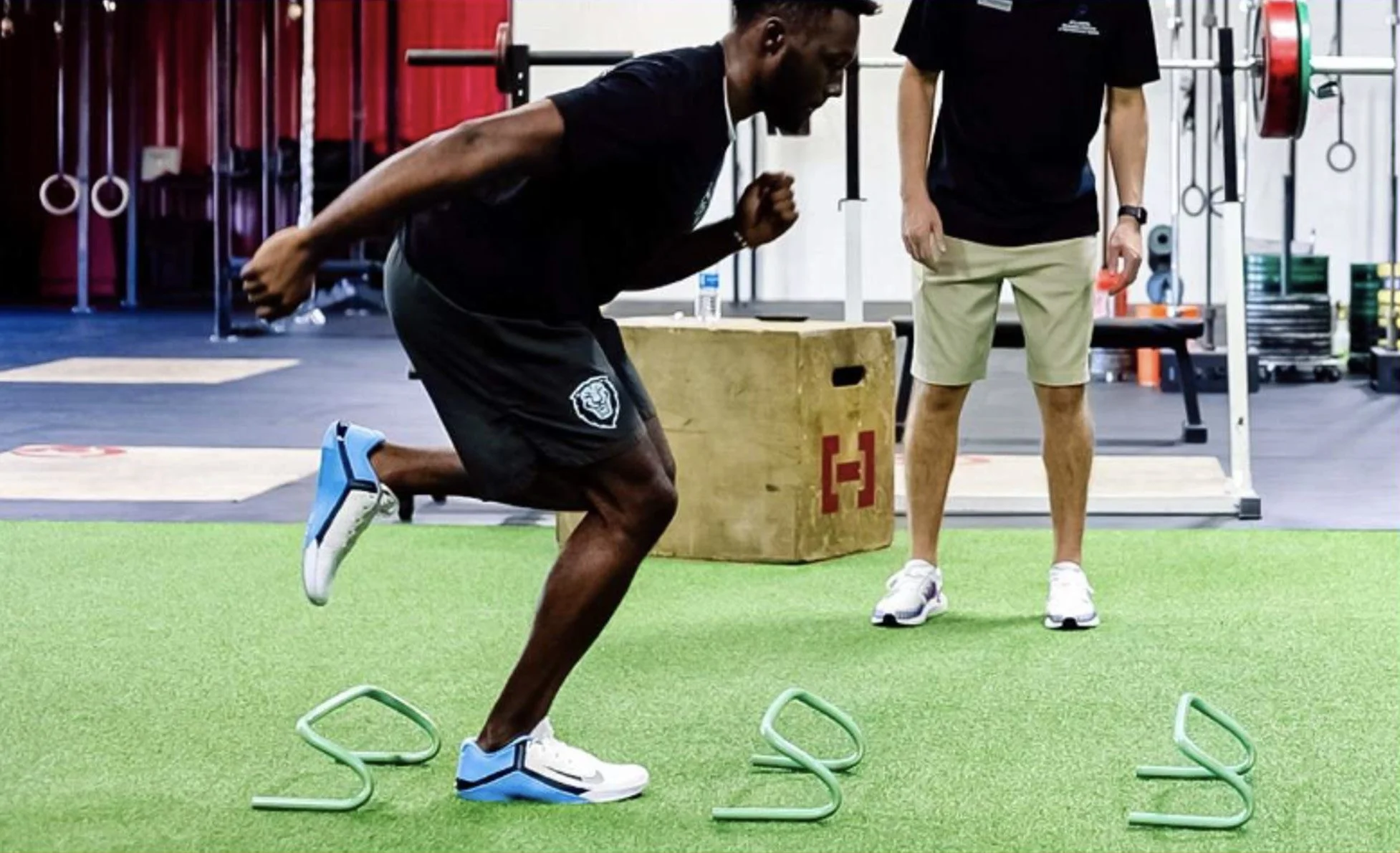
Why the ACL tears in the first place
The vast majority of ACL injuries are non-contact — they happen when an athlete plants, cuts, decelerates, or lands from a jump, not from a direct blow to the knee. The common thread across these mechanisms is a knee collapsing inward (dynamic valgus) combined with the tibia rotating relative to the femur, often with the knee close to full extension and poor trunk control. Understanding this mechanism is exactly what prevention programs are built around: teach the body to move through these positions differently.
Who's at higher risk?
A few factors are consistently associated with elevated ACL injury risk:
Sex: Female athletes tear their ACL at 2-8x the rate of male athletes in comparable sports, likely due to a combination of neuromuscular control patterns, landing mechanics, hormonal factors, and anatomical differences.
Sport type: Cutting and pivoting sports — soccer, basketball, handball, football, alpine skiing — carry the highest exposure.
Previous ACL injury: Having torn one ACL substantially raises the risk of tearing the other, or re-tearing the reconstructed one.
Fatigue: Injury rates rise later in matches and practices, when neuromuscular control degrades.
The prevention programs that have evidence behind them
Several structured, sport-specific warm-up and training programs have been studied in large trials and shown to reduce ACL injury rates, often by 30-50% or more when implemented consistently. The most well-known include:
FIFA 11+: A 20-minute warm-up program for soccer combining running, strength, balance, and plyometric exercises
PEP Program (Prevent Injury and Enhance Performance): Developed specifically with a focus on reducing ACL injuries in female athletes
Sportsmetrics: A jump-training program focused on landing mechanics
While the specific drills vary, these programs share common building blocks.
The core components of effective programs
Neuromuscular training: Exercises that retrain how the brain and muscles coordinate to control the knee during dynamic movement — this is considered the single most important element.
Landing mechanics: Teaching athletes to land from jumps with bent knees, hips back, and knees tracking over the toes rather than collapsing inward.
Strength training: Particularly of the hamstrings and hip/glute muscles, which help control valgus collapse and anterior tibial translation.
Plyometrics: Controlled jump-and-land drills that build power while reinforcing safe mechanics.
Balance and proprioception: Single-leg balance work improves the body's ability to sense and correct joint position in real time.
Cutting and deceleration technique: Coaching athletes on how to decelerate and change direction with better body positioning, rather than relying purely on physical qualities.
Consistency is the biggest predictor of success
The research on these programs points to a clear pattern: benefits scale with dose and adherence. Programs done 2-3 times per week, integrated into regular warm-ups over a full season, show meaningfully better results than programs done sporadically or abandoned after preseason. Teams that treat these as a permanent part of training — not a box to check early in the season — see the biggest reductions in injury rates.
What about bracing and taping?
Prophylactic knee bracing has not shown strong evidence of reducing ACL injury risk in uninjured athletes, and it isn't a substitute for neuromuscular training. Bracing is more commonly used post-injury or post-surgery, where it may offer some protection during the return-to-sport phase, rather than as a primary prevention tool.
Practical takeaways
Prevention programs work best as an ongoing part of training, not a one-off pre-season session.
The focus should be on movement quality — landing softly, keeping knees aligned over toes, avoiding valgus collapse — not just general strength or conditioning.
Female athletes and athletes in cutting/pivoting sports may benefit most from prioritizing these programs.
Athletes recovering from a previous ACL injury are a particularly important group to target, given their elevated re-injury risk.
ACL tears can't be eliminated entirely — some are the result of an unavoidable collision or an awkward landing that could happen to anyone. But a substantial share of these injuries are preventable, and the tools to reduce risk are well-studied, low-cost, and don't require anything more advanced than a well-run 15-20 minute warm-up.
This post is for general educational purposes and isn't a substitute for personalized guidance from a sports medicine professional, physical therapist, or athletic trainer.
References
1. Mandelbaum BR, Silvers HJ, Watanabe DS, et al. Effectiveness of a neuromuscular and proprioceptive training program in preventing anterior cruciate ligament injuries in female athletes: 2-year follow-up. Am J Sports Med. 2005;33(7):1003-1010.
2. Gagnier JJ, Morgenstern H, Chess L. Interventions designed to prevent anterior cruciate ligament injuries in adolescents and adults: a systematic review and meta-analysis. Am J Sports Med. 2013;41(8):1952-1962.
3. Sadigursky D, Braid JA, De Lira DNL, et al. The FIFA 11+ injury prevention program for soccer players: a systematic review. BMC Sports Sci Med Rehabil. 2017;9:18.
4. Grimm NL, Jacobs JC Jr, Kim J, Denney BS, Shea KG. Anterior cruciate ligament and knee injury prevention programs for soccer players: a systematic review and meta-analysis. Am J Sports Med. 2015;43(8):2049-2056.
5. Sugimoto D, Myer GD, Foss KDB, Hewett TE. Specific exercise effects of preventive neuromuscular training intervention on anterior cruciate ligament injury risk reduction in young females: meta-analysis and subgroup analysis. Br J Sports Med. 2015;49(5):282-289.
6. Padua DA, DiStefano LJ, Hewett TE, et al. National Athletic Trainers' Association position statement: prevention of anterior cruciate ligament injury. J Athl Train. 2018;53(1):5-19.
7. Steffen K, Meeuwisse WH, Romiti M, et al. Evaluation of how different implementation strategies of an injury prevention programme (FIFA 11+) impact team adherence and injury risk in Canadian female youth football players: a cluster-randomised trial. Br J Sports Med. 2013;47(8):480-487.
8. Sugimoto D, Myer GD, McKeon JM, Hewett TE. Evaluation of the effectiveness of neuromuscular training to reduce anterior cruciate ligament injury in female athletes: a critical review of relative risk reduction and numbers-needed-to-treat analyses. Br J Sports Med. 2012;46(14):979-988.
Note: this reference list highlights foundational and widely cited studies on ACL injury prevention programs. It is not exhaustive, and readers looking to go deeper should search current systematic reviews and meta-analyses, as this remains an active area of research.
